How to Prepare Financially for Buying a Second Home
4 August 2026
Buying a second home is a different financial animal than buying your first. The first time, you were probably just trying to get a foothold. You stretched, you compromised, and you told yourself it was temporary. With a second property, the stakes are higher because the margin for error is thinner. You already have a mortgage or a housing payment. You have equity, maybe, but you also have a lifestyle that depends on your current cash flow. Adding a second property means adding a second set of risks, and those risks need to be managed with a level of discipline that most first-time buyers never have to develop.
The biggest mistake people make is treating a second home like a bigger version of their first purchase. They focus on the down payment and the monthly mortgage, and they completely ignore the operational reality of owning two properties. That is where the financial damage happens. This guide walks through the actual preparation process, not just the numbers on a loan application, but the full picture of what it takes to carry a second property without sinking your primary financial life.

Step One: Define What the Second Home Is For
Before you run a single calculation, you need to be brutally honest about the purpose of this property. The financial strategy for a vacation home is completely different from the strategy for an income property, and a home that you plan to retire in someday is a third category entirely. Many buyers blur these lines, and that blurring creates bad decisions.If the home is purely for personal use, a lake cabin or a beach condo, then it is a liability on your balance sheet from day one. It will produce no income, it will require maintenance, and it will sit empty for most of the year. That is fine, but you have to fund it entirely from your earned income and savings. If the home is a rental, even part-time, then you have a business on your hands. That changes your tax strategy, your insurance needs, and your cash flow projections. If the home is a future retirement residence, then you are essentially pre-paying for housing decades in advance, which means your timeline and your liquidity needs are different.
Write down the primary purpose. Then write down the secondary purpose. If the secondary purpose is generating rental income, you need to be honest about how much income you can realistically expect. If the secondary purpose is appreciation, you need to be honest about the fact that appreciation is not guaranteed and that you cannot spend it until you sell.

Step Two: Audit Your Current Cash Flow with Harsh Honesty
Most people look at their monthly income, subtract their monthly expenses, and see a surplus. That surplus feels like capacity. But that surplus is usually already spoken for in ways that are not obvious. You have car repairs, medical deductibles, holiday spending, and the slow creep of inflation on groceries and utilities. A second home will not just take the surplus. It will take the surplus plus a cushion you did not know you needed.Do a real audit. Not a mental audit. An actual spreadsheet or a written list. Track every dollar that leaves your account for three full months. Include the annual insurance premium that hits once a year. Include the property tax escrow that you pay through your mortgage. Include the subscription services you forgot about. Then subtract that from your net take-home pay. The number left over is your true disposable income.
Now ask yourself a hard question: can you afford to lose that entire disposable income every month for the next two years? Because that is what a second home can do. Even if you plan to rent it out, you cannot guarantee occupancy. Even if you plan to use it every weekend, you will have months where you do not go and the bills still come. If the answer is no, then you are not ready yet. That is not a judgment. That is math.
Step Three: Understand the Real Down Payment Requirement
The common assumption is that you need twenty percent down for a second home. That is often true, but it is not a rule. It is a guideline set by lenders who view second homes as riskier than primary residences. The logic is simple: if you hit financial trouble, you are more likely to stop paying on the second home than on the primary home. Lenders know this, so they demand more equity as protection.However, twenty percent is not always required. Some lenders will accept ten percent down for a second home if your credit is excellent and your debt-to-income ratio is low. But there is a catch. With less than twenty percent down, you will pay private mortgage insurance, and that insurance is more expensive for second homes than for primary residences. It can add hundreds of dollars to your monthly payment. You also get a worse interest rate because the loan is riskier.
The smarter approach is to plan for twenty-five percent down. That extra five percent gives you a buffer against appraisal shortfalls and closing costs that you might not have anticipated. It also gives you a lower loan-to-value ratio, which means a better rate and no mortgage insurance. If you cannot comfortably reach twenty-five percent, then you are probably not ready, because the closing costs alone on a second home can run between two and five percent of the purchase price.

Step Four: Prepare for the Reality of Closing Costs
First-time buyers are often surprised by closing costs. Second-time buyers have no excuse. You know the drill: appraisal fees, title search, title insurance, loan origination, recording fees, and prepaid property taxes. But the costs for a second home are often higher because the lender charges a premium for the perceived risk.A good rule of thumb is to have an additional three to four percent of the purchase price set aside in cash, on top of your down payment, just for closing. If you are buying a four hundred thousand dollar property, that is twelve to sixteen thousand dollars. That is not a small number, and it is not something you can finance into the loan without paying for it over thirty years with interest.
One way to reduce closing costs is to get quotes from multiple lenders and ask for a loan estimate that breaks down every fee. Compare the fees line by line. Some lenders charge higher origination fees but offer lower interest rates. Others do the opposite. You have to run the numbers to see which one makes sense over the life of the loan. Do not just look at the monthly payment. Look at the total cost of the loan, including all fees, over the first five years. That is your real cost.
Step Five: Build a Cash Reserve That Is Actually Enough
Financial advisors often say you need three to six months of expenses in an emergency fund. For a second home, that is not enough. You need three to six months of expenses for both homes, plus a separate fund for unexpected repairs on the second property.Here is why. If you lose your job, you still have to pay both mortgages. If the roof on the second home leaks, you have to fix it, and you cannot wait for insurance to pay out. If the tenant stops paying rent, you have to cover the mortgage until you evict them, which can take months in some states.
A realistic reserve for a second home is ten to fifteen thousand dollars in liquid cash, on top of your regular emergency fund. That money should be in a high-yield savings account, not invested in the stock market. You need it to be available immediately, without penalty, and without worrying about market fluctuations. If you cannot accumulate that reserve without draining your primary savings, then you are not financially ready.
Step Six: Run the Numbers on Rental Income, If You Plan to Rent
If you plan to rent out the second home, even occasionally, you need to do a realistic cash flow analysis. The mistake most people make is using the peak season rental rate for their projection. They assume the property will be rented every weekend in the summer and every week during the holidays. That is not how it works.The reality is that short-term rentals have vacancy periods. You will have weeks with no bookings. You will have cancellations. You will have cleaning fees and turnover costs. You will have to pay for property management if you do not want to handle it yourself, and that typically costs twenty to thirty percent of the rental income.
A more realistic projection is to assume the property will be rented at fifty to sixty percent of its maximum potential. That means if you could theoretically rent it for two thousand dollars a week for twenty weeks a year, you should plan on actual income of around twenty to twenty-four thousand dollars, not forty thousand. Subtract property management, cleaning, repairs, utilities, and property taxes from that number, and you will see what you are really making.
If the rental income does not cover at least seventy percent of your total monthly carrying costs, then you are essentially subsidizing the property every month. That is fine if you can afford it, but you need to know that going in. Do not fool yourself into thinking the rental income will make the property break even when the math says otherwise.
Step Seven: Understand the Tax Implications Before You Commit
The tax rules for second homes are complicated, and they depend on how you use the property. If you use it purely for personal purposes, you can deduct the mortgage interest and property taxes, but only if you itemize your deductions. The standard deduction is high enough that many people no longer itemize, which means the tax benefit is smaller than they expect.If you rent the property out, the rules change. You have to allocate your expenses between personal use and rental use. The IRS has specific guidelines for how many days you can use the property personally and still deduct rental expenses. If you rent it for fewer than fifteen days a year, you do not have to report the income, but you also cannot deduct any rental expenses. If you rent it for more than fifteen days, you have to report the income, but you can deduct expenses proportionally.
The key is to keep meticulous records. Track every day you use the property personally. Track every day it is rented. Track every expense, from utilities to repairs to property management fees. If you do not have the discipline to maintain those records, then you should not be renting the property. The IRS is not forgiving when it comes to vacation home deductions, and an audit can be painful.
Step Eight: Check Your Debt-to-Income Ratio from the Lender's Perspective
Lenders look at your debt-to-income ratio, which is the total of all your monthly debt payments divided by your gross monthly income. For a second home, most lenders want this ratio to be below forty-three percent, though some will go up to fifty percent if your credit is excellent.The problem is that your current mortgage counts as a debt payment, even if you have been paying it for years. The new mortgage on the second home also counts. If you have car loans, student loans, or credit card debt, those count too. When you add it all up, you might find that you have no room for a second mortgage, even if your income is high.
If your ratio is too high, you have two options. You can pay down existing debt, which is the slow and steady approach. Or you can increase your income, which is easier said than done. The third option is to wait until your primary mortgage is paid down or paid off. That might take years, but it is the cleanest path to qualifying for a second home without stretching yourself thin.
Step Nine: Consider the Opportunity Cost of Your Down Payment
When you put a large down payment on a second home, you are taking that money out of the market. If you are buying a property that appreciates at three percent a year, but the stock market averages seven percent a year, you are losing four percent in potential growth every year. That is a real cost, even if it is not visible on a monthly statement.This is not to say that buying a second home is a bad investment. It is to say that you need to be honest about what you are giving up. If the second home brings you joy, if it is a place where your family makes memories, then the opportunity cost is worth it. But if you are buying it purely as an investment, you need to compare it against other investment options, including index funds, real estate investment trusts, and even a simple high-yield savings account.
A good exercise is to calculate the total return you expect from the second home over ten years, including appreciation, rental income, and tax benefits. Then compare that to the total return you would get from investing the same amount of money in a diversified portfolio. If the second home does not come out ahead, or at least close, then you are buying it for emotional reasons, not financial ones. That is okay, but you should know that is what you are doing.
Step Ten: Plan for the Hidden Carrying Costs
The mortgage payment is the obvious cost. The hidden costs are what sink people. Property taxes on a second home are often higher than on a primary residence because many jurisdictions do not offer homestead exemptions for second properties. Insurance is also higher, sometimes significantly, because the property is unoccupied for long periods and is more vulnerable to damage.Maintenance is another hidden cost. A second home does not maintain itself. You have to mow the lawn, clean the gutters, service the HVAC system, and fix the plumbing when it breaks. If you are not local, you have to pay someone to do these things, and that costs money. A realistic maintenance budget for a second home is one to two percent of the property value per year. On a four hundred thousand dollar home, that is four to eight thousand dollars annually.
Utilities are also a factor. Even when the home is empty, you still have to pay for electricity, water, and possibly gas to keep the pipes from freezing in the winter. If you have a pool, you have to run the pump. If you have a security system, you have to pay the monitoring fee. Add it all up, and the true carrying cost of a second home is often thirty to forty percent higher than the mortgage payment alone.
Step Eleven: Get Pre-Approved, But Do Not Stop There
Getting pre-approved for a mortgage is a necessary step, but it is not the same as being financially ready. Pre-approval only tells you what a lender is willing to give you. It does not tell you what you can afford without compromising your lifestyle.A better approach is to get pre-approved, then subtract twenty percent from the maximum loan amount you are offered. That is your real budget. If the lender says you can borrow five hundred thousand dollars, plan on borrowing four hundred thousand. That gives you room for unexpected expenses, interest rate fluctuations, and the natural tendency to overspend on renovations and furnishings.
Also, be aware that pre-approval is based on your current financial situation. If you change jobs, take on new debt, or make a large purchase before closing, the lender can pull the offer. Keep your finances stable during the buying process. Do not open new credit cards. Do not buy a new car. Do not make any large deposits into your bank account without explaining the source. The underwriting process for a second home is more rigorous than for a primary residence, and any red flag can delay or kill the deal.
Step Twelve: Stress Test Your Finances with a Worst-Case Scenario
Before you sign anything, imagine the worst-case scenario. You buy the second home. Six months later, you lose your job. The rental market drops, and you cannot find tenants. The roof leaks, and insurance does not cover the full repair. You have to pay two mortgages, two sets of property taxes, and two sets of insurance premiums, with no income from the second property.Can you survive that for twelve months? If the answer is yes, then you are financially ready. If the answer is no, then you are taking a risk that could destroy your primary financial security.
A good stress test is to calculate your total monthly expenses with both properties, then subtract your rental income assumption entirely. Then ask yourself how long you could cover that with your savings alone. If the answer is less than six months, you need to save more before you buy. This is not pessimism. This is prudence. The second home should be a source of joy, not a source of financial anxiety.
Step Thirteen: Know When to Walk Away
There will be moments in the buying process when you feel pressure to overextend. The seller might not budge on price. The lender might offer you more than you planned to borrow. The agent might tell you that this is a once-in-a-lifetime opportunity. Ignore all of that.A second home is a luxury. It is not a necessity. If the numbers do not work, walk away. There will be another property. There will be another opportunity. The worst financial decision you can make is to buy a second home that stretches you so thin that you cannot enjoy it, or worse, that you lose your primary home because you could not carry both.
Set your maximum budget before you start looking. Write it down. Do not exceed it for any reason. If the perfect property is ten thousand dollars over your budget, it is not the perfect property. It is a trap. Stick to your numbers, and you will be fine.
Step Fourteen: Consider the Long-Term Exit Strategy
You should also think about how you will eventually sell the second home. Will you sell it to fund your retirement? Will you pass it on to your children? Will you rent it out full-time when you stop using it? Each of these scenarios has different financial implications.If you plan to sell, understand that real estate commissions, closing costs, and capital gains taxes will eat into your profit. If you have owned the property for more than two years and used it as a primary residence for at least two of the last five years, you can exclude up to two hundred fifty thousand dollars of gain from taxes. But a second home does not qualify for that exclusion unless you convert it to your primary residence. That is a long game, and you need to plan for it.
If you plan to pass it on to your children, understand that they will inherit the property at its current market value, which means they can sell it without paying capital gains tax on the appreciation that happened during your ownership. That is a significant tax advantage, but it only works if you hold the property until death. If you sell it before then, you are on the hook for the gains.
Step Fifteen: The Final Checklist Before You Commit
Before you make an offer, run through this checklist. Do you have twenty-five percent down in cash, plus closing costs, plus a ten thousand dollar reserve? Does your debt-to-income ratio leave room for the new mortgage without exceeding forty-three percent? Have you projected rental income at fifty percent of maximum, and can you cover the shortfall? Have you budgeted one to two percent of the property value for annual maintenance? Have you checked the property tax rate and insurance costs for a second home in that specific location? Have you compared the opportunity cost of the down payment against other investments? Have you stress tested your finances with a full year of no rental income?If you can answer yes to all of those, then you are ready. If you hesitate on any of them, then you need more time. There is no shame in waiting. The second home will still be there when you are truly prepared. And when you do buy it, you will be able to enjoy it without the constant worry of financial strain. That is the real goal.
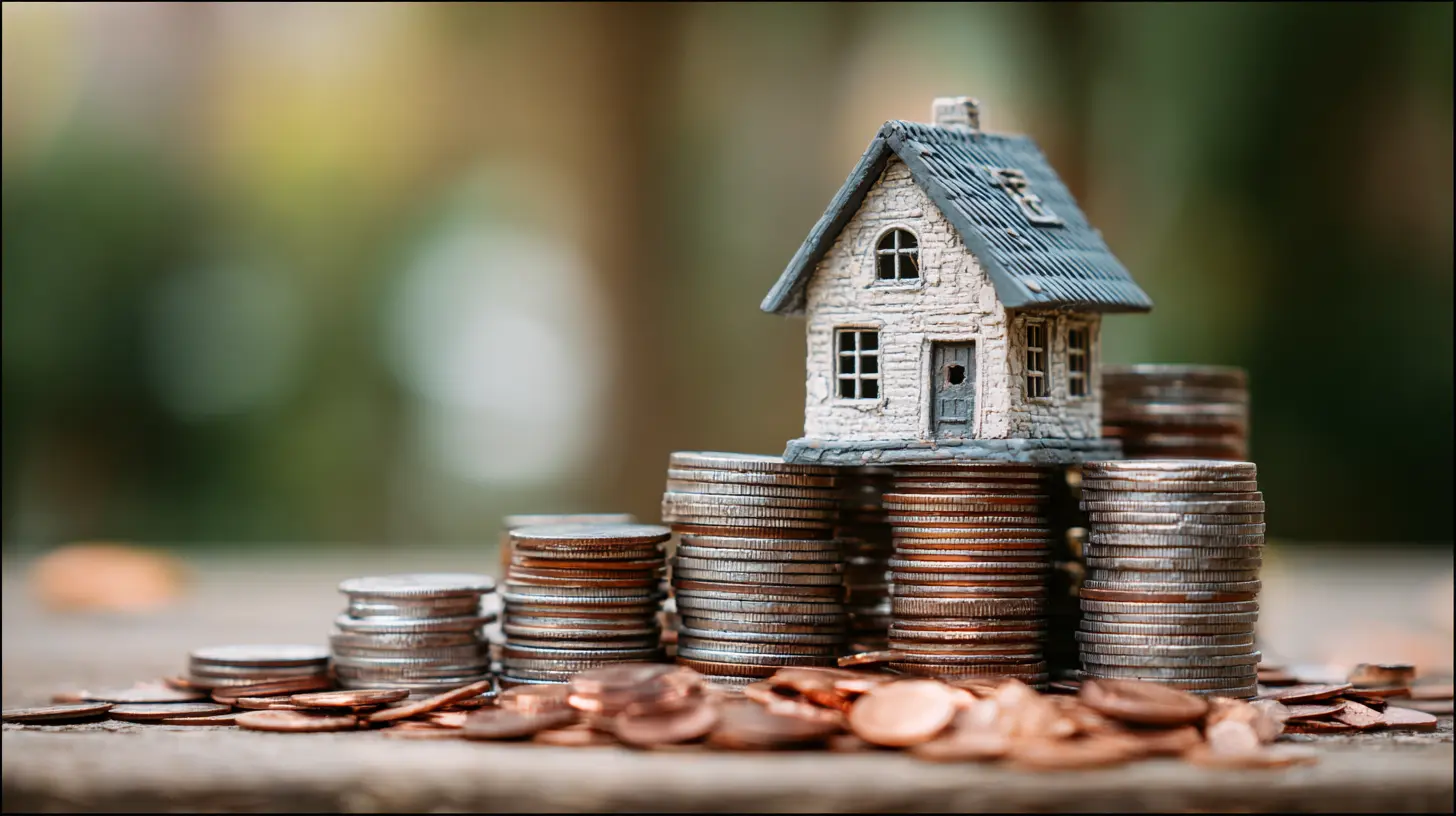
all images in this post were generated using AI tools
Category:
Financial PlanningAuthor:

Lydia Hodge
Discussion
rate this article
1 comments
Seth McDaniel
Invest wisely and embrace new opportunities ahead!
August 4, 2026 at 10:41 AM
Lydia Hodge
Thanks for the encouragement! Embracing new opportunities is key in this journey.